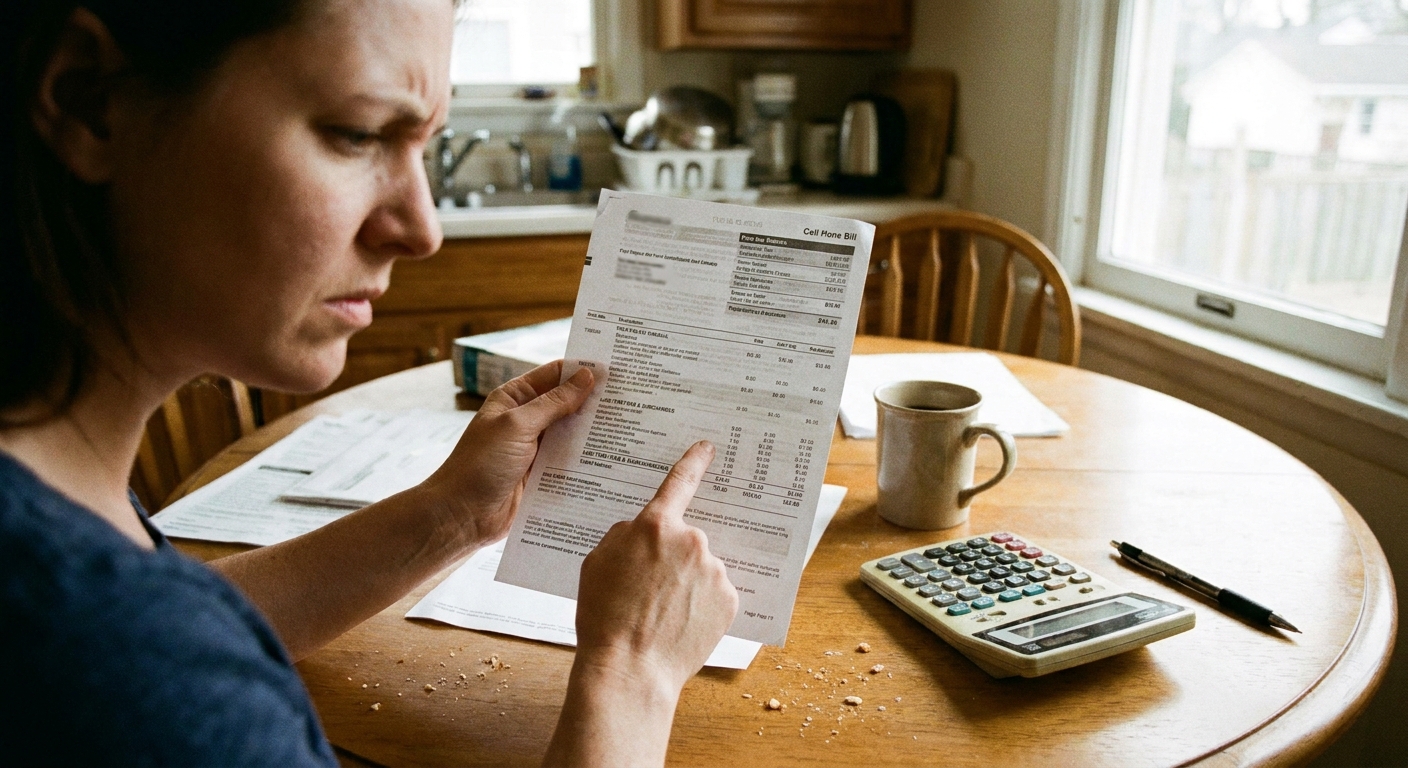
I grew up in a big, scattered family, which meant our group texts were basically a utility. Over time I learned something frustrating: the easiest way to keep a phone bill high is to “upgrade” the way your carrier wants you to. The deal looks simple, the monthly price looks manageable, and the phone shows up fast. Then two years later you realize you paid top dollar for service you did not even want, and you are somehow still not free to leave.
That is the carrier phone financing trap in a nutshell. Financing is not automatically bad. The problem is how promos are designed to attach you to an expensive plan for as long as possible, while making the phone feel cheap or even “free.”
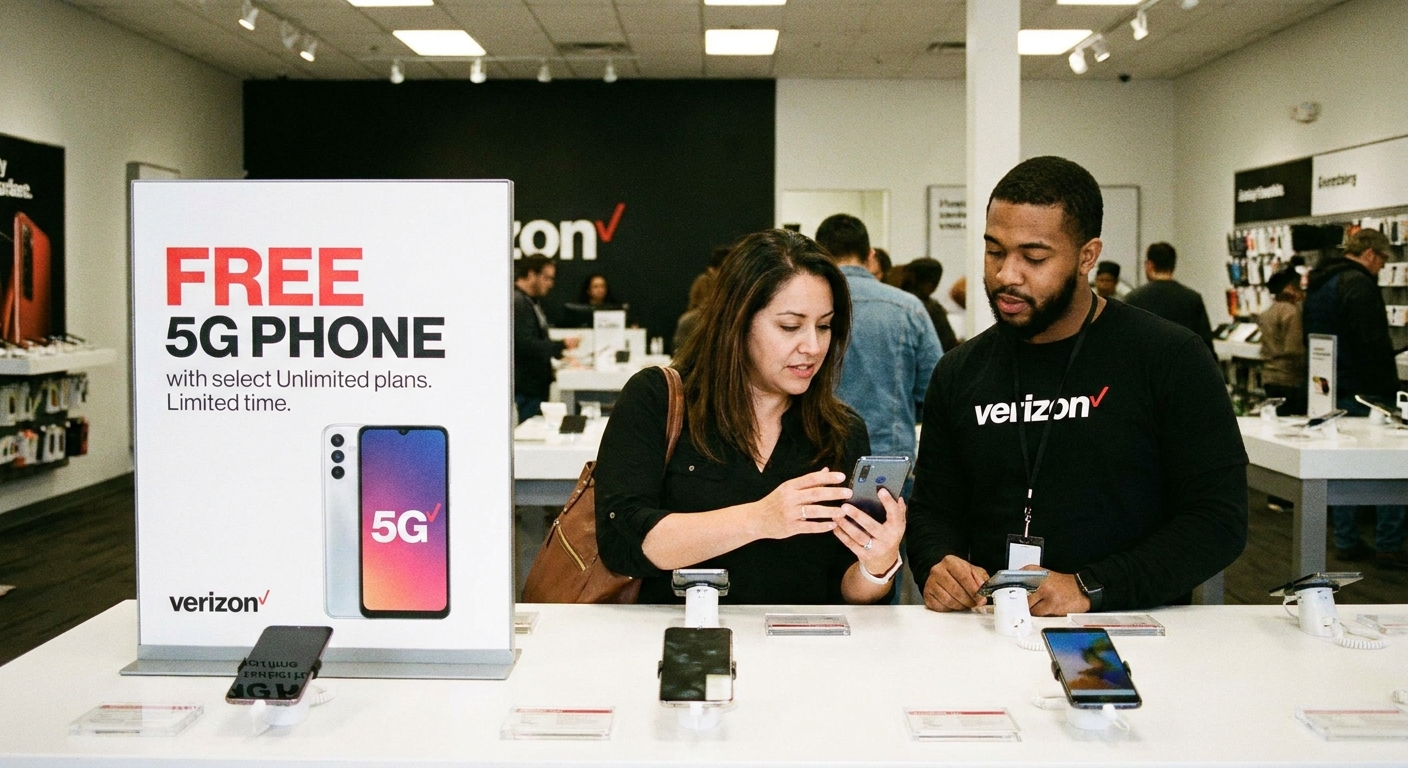
Why “free phone” promos keep your bill high
Most big carrier promos rely on the same mechanics: you only get the deal if you keep paying for a qualifying plan, and you only receive the discount as monthly credits over time.
1) The discount is spread across 24 to 36 months
When a carrier advertises a $0 phone, it often means the phone’s cost is financed, and the carrier applies a credit each month that cancels that payment out. If you leave early, the remaining phone balance typically becomes due and you stop receiving the credits. That turns “free” into “pay the rest right now.”
2) The deal requires an eligible plan (often unlimited)
Promos often require an eligible unlimited plan, sometimes mid-tier, sometimes top-tier. Those plans can be fine, but plenty of people do not need them. The upgrade deal nudges you into paying more every month for data you do not use.
If you are trying to shrink your plan cost instead, start with a plan reality check and bill audit. I walk through a simple process here: Audit your phone bill before switching.
3) Trade-ins are valued in a way that only makes sense inside the promo
Carriers can offer inflated trade-in values, but the value is usually locked behind those monthly credits. Outside the promo, your old phone might be worth far less. Inside the promo, it is “worth” a lot, but only if you stay put for the full term.
4) Many promos also require a specific action
This is the fine print that catches people who only saw the big “free” headline. Common requirements include:
- Adding a new line (or moving a line onto a certain plan)
- Porting in a number from another carrier
- A qualifying trade-in that meets eligibility rules (model list, condition checks, no major damage)
None of those are inherently wrong, but they change the math. A “free phone” that requires a new line can turn into an extra $30 to $60 a month for years.
5) Fees pile on top of the “great” monthly price
Even if the phone payment is offset, your bill can still climb because of:
- Activation or upgrade fees
- Device protection plans that get added at checkout
- Taxes that are often collected upfront on the full retail price (rules vary by state and local jurisdiction)
- Higher plan tiers that bump your base rate
6) The upgrade cycle resets before you ever get ahead
The oldest trick is the one we do to ourselves: once you get used to “only” paying an extra $0 to $10 a month for a nicer phone, the next upgrade feels easy too. “It is free” turns into “why not the Pro model for $8 more?” You stay in permanent payments, and the carrier gets permanent leverage.
Financing vs promos vs buying outright
Here is how I explain it to friends when they are staring at a carrier kiosk pitch.
- Buying outright: You pay the full price (new or used), and your monthly bill is just service. You can switch carriers whenever you want.
- Financing without a promo: You split the phone cost into monthly payments. You still owe the remaining balance if you leave, but there are no promo credits to lose.
- Financing with promo credits: You finance the phone and receive monthly credits that depend on you staying on an eligible plan for the entire promo period. Leaving early usually means paying the remaining balance and losing future credits.
That last one is where people get burned because it feels like a discount, but functions like a contract.
Quick self-check
If you answer “yes” to any of these, you are probably more locked in than you think.
- Your bill includes a line called “device payment,” “installment,” or similar.
- You see “bill credits” tied to your phone or trade-in.
- You see language like “promo credit,” “trade-in credit,” or “eligible plan” on your bill or receipt.
- You are on a premium plan mainly because the promo required it.
- You feel like switching carriers would be expensive right now.
- Your phone is unlocked only after it is paid off (common) and you are not paid off yet.
If you want to get surgical about it, look for the payoff amount and the remaining months on the installment plan. That number is what you are really committing to.
Cheaper ways to upgrade
I am not anti-upgrade. I am anti-upgrade that drags your plan cost upward for years. These are the approaches that usually win on total cost.
1) Buy a reliable refurbished phone and keep your cheaper plan
Refurbished is where I see the best value for normal people who want a phone that just works. You avoid the new-phone premium, you keep flexibility, and you can pair it with a low-cost plan.
If you want my shopping checklist and where to look, I keep it here: Where to buy reliable refurbished phones.

2) Switch to a cheaper plan first, then upgrade
This feels backward because carriers train us to upgrade first. But if you reduce your monthly service cost, you can afford a phone purchase without getting trapped.
For a starting point, see: Best cheap MVNO plans for Wi-Fi texting. Wi-Fi calling and texting can be a huge bill-saver if your home and work coverage is solid.
One tradeoff to watch: some MVNOs have different priority rules (you might notice slowdowns during congestion) and hotspot limits can be tighter. For many people, the savings are still worth it, but it is smart to check the details before you jump.
3) Use a “good enough” phone longer and spend a little on repair
People underestimate how often a phone “feels old” because the battery is tired, the charging port is dirty, or storage is full. A battery replacement or basic repair can buy you another year or two for a fraction of the cost of upgrading. Pricing varies a lot by model and shop, but at independent repair stores it is often in the $50 to $200 range.
- Replace the battery (especially if it drops fast under 30 percent).
- Clean up storage and apps.
- Use a sturdy case and screen protector and stop the slow damage cycle.
4) Buy last year’s model
If you like buying new, the cheaper move is to buy one generation back when prices fall. You still get a modern camera and security updates, without paying the launch premium. This is especially straightforward with iPhone. On Android, check how many years of updates your specific model has left before you buy.
5) Separate the phone decision from the plan decision
This is the mindset shift that saves the most money. Treat your plan like a utility you keep inexpensive and stable. Treat your phone like a tool you buy on the best terms you can find. When you bundle them, the carrier gets to move money between buckets and call it a “deal.”
A simple cost test
When someone asks me if a promo is worth it, I do this back-of-the-napkin comparison:
- Write down the promo plan cost (what you will pay monthly for service).
- Write down the cheaper plan you would choose without the promo (MVNOs often come in far lower).
- Multiply the difference by 24 or 36 months (the promo term).
- Add upfront taxes and fees (activation, upgrade, etc.).
- Compare that total to the real cost of buying a phone outright (new or refurbished).
If the “plan difference” alone adds up to several hundred dollars, the phone was not free. You just prepaid it through a higher monthly bill.
How to escape the trap
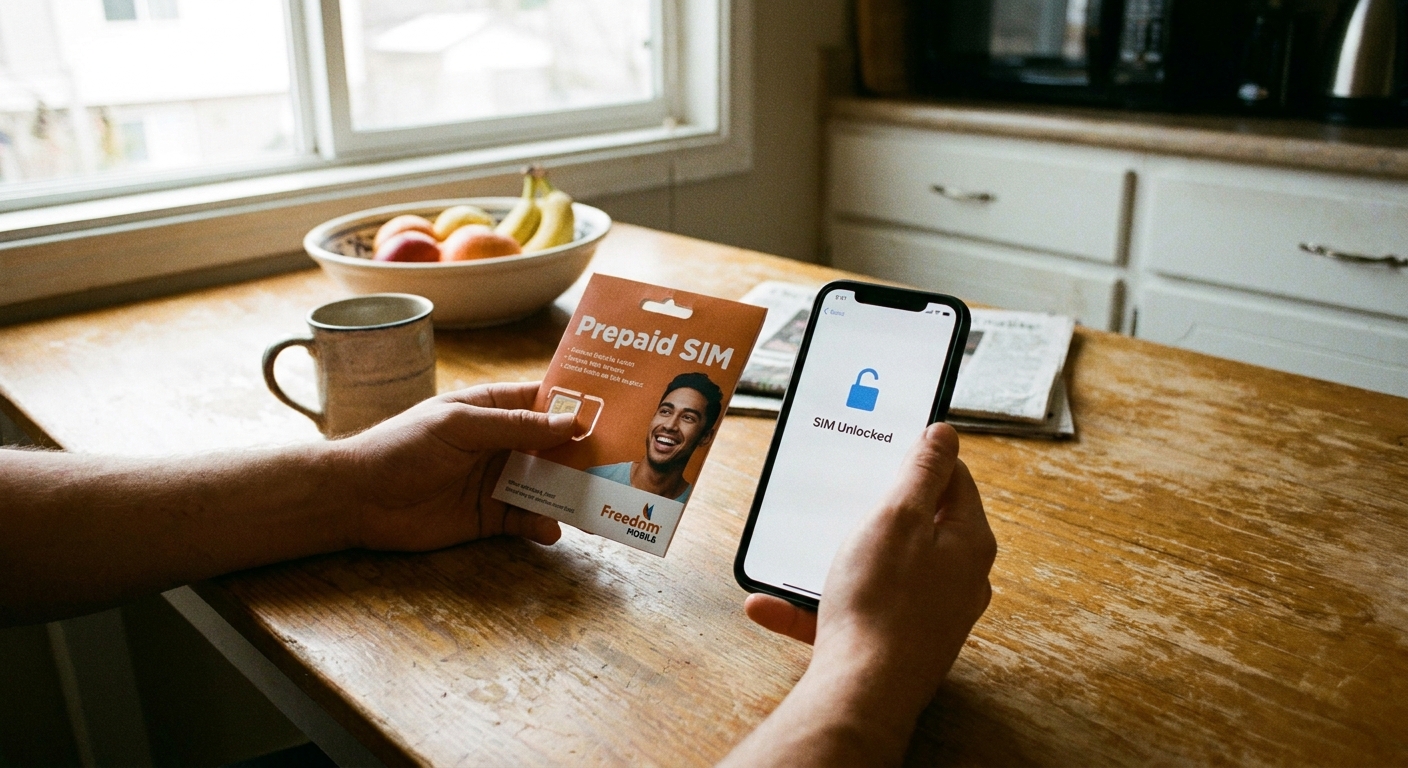
Pay off the phone, then unlock it
If you are close to the end, paying the remaining balance can be the cleanest exit. Once it is paid off and unlocked, you can take it to a cheaper provider.
Also note: unlocking is not always instant. Many carriers require the device be paid off and meet a minimum number of active days on the network. If you are planning a switch, build in a little timing buffer.
Time your switch around billing cycles and credits
If you are receiving promo credits, confirm what happens if you pay off early or leave early. Some promos require the line to stay on installments to keep receiving credits, while others may keep credits after an early payoff. Do not guess. Check the exact promo terms shown in your account, your receipt, or your installment agreement before you make a move.
Lower your bill even if you cannot leave yet
Sometimes you cannot switch immediately without eating the payoff cost. In that case, focus on trimming what you can now:
- Remove insurance you do not want.
- Drop plan tier if the promo allows it (often it does not, but it is worth checking).
- Negotiate or reduce fees where possible. I share tactics here: Negotiate a lower cell phone bill using free apps.
Common questions
Is carrier financing ever a good deal?
It can be, especially if it is true 0 percent financing and it does not force you onto a more expensive plan you do not need. The problem is not installment payments. The problem is the “free phone” promo that quietly requires a high monthly service cost and punishes you for leaving.
Will buying an unlocked phone really save me money?
It often does because it lets you choose cheaper service. The phone is a one-time (or occasional) cost. The plan is a monthly cost that never stops. If you can lower the plan by $20 to $40 a month, that often beats most promo math over time.
What if I need a phone for verification texts and 2FA?
If you are trying to keep costs low, you can sometimes separate “I need a number” from “I need expensive cellular data.” I have a full breakdown of options here: Free second phone number for texting and verification.
The takeaway
Carrier promos are built to make the phone feel cheap and the plan feel unavoidable. If you want a lower bill, flip the script: keep your plan affordable and flexible, and upgrade your device on terms that do not require years of expensive service.
Once you start doing the math in total cost instead of monthly payments, those “free” upgrades stop looking free pretty fast.