

I grew up in a big, scattered family, which meant our group chats never stopped and neither did the phone bills. Once I started tinkering with prepaid plans and Wi-Fi calling, I noticed a pattern: the companies that want your money for a year upfront almost always pitch it like a guaranteed win. Sometimes it is. Sometimes it is just a different kind of headache.
This guide is the straight math and the real-world stuff that decides whether an annual phone plan is actually cheaper for you, or just cheaper on paper.
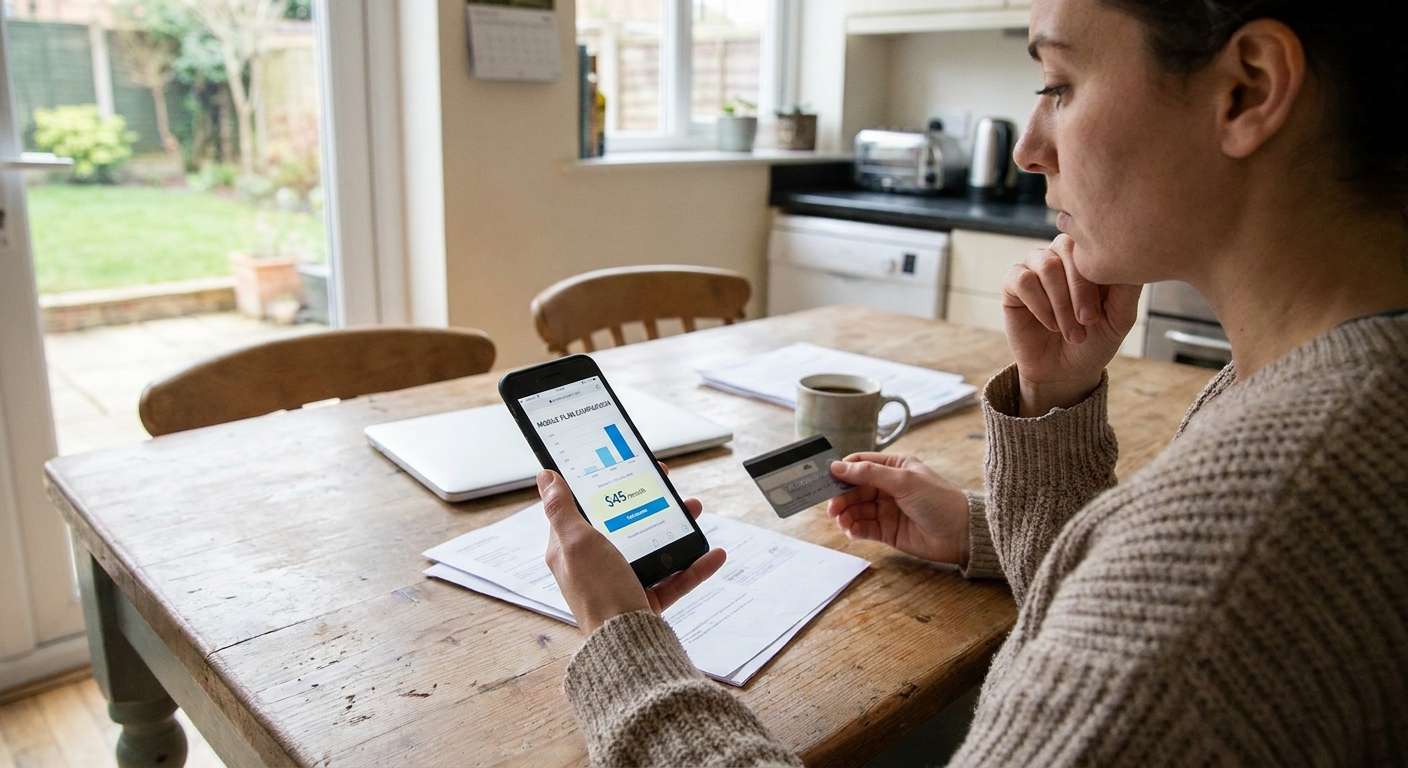
What “annual prepaid” means
An annual prepaid plan is simple: you pay for service in a lump sum for a fixed term (typically 12 months, about a year) instead of paying monthly. You are not signing a traditional postpaid contract, but you are locking money in.
What usually stays the same
- You are typically using the same underlying network (same towers and general coverage footprint) as that brand’s other prepaid offerings.
- You still manage service in an app or online account.
- You can often change devices anytime (as long as they support the network and are compatible).
What can change
- Refunds: often limited or nonexistent if you change your mind mid-year.
- Plan changes: can be restricted. Some providers make you finish the term or pay again to upgrade.
- Performance and features: “same towers” does not always mean the same experience. Priority level (deprioritization), domestic roaming, video limits, and hotspot rules can vary by plan.
- Promos: discounts can be front-loaded into the annual price, which makes comparisons tricky.
If you want a broader baseline on plan types, I break down the bigger differences here: Prepaid vs. Postpaid Plans: Which Saves More on Texting?
The baseline comparison: effective monthly cost
When a plan is advertised as “$240 per year,” the first number you should translate is the effective monthly cost.
Effective monthly cost = annual price ÷ 12
Then compare it to the monthly plan you would otherwise buy.
Quick example
- Monthly plan: $25 per month
- Annual plan: $240 per year
$240 ÷ 12 = $20 per month effective. That is a $5 per month discount.
But to decide if it is worth it, you also need to know your break-even point and your odds of switching.
Break-even math
Here is the question I ask myself before paying upfront: How many months would I have to keep this service for the annual plan to beat the monthly plan?
Think of it as two running totals:
- Option A: pay the annual plan once
- Option B: pay monthly for N months
Break-even is when those totals match.
Break-even months = annual price ÷ monthly price
Important caveat: use your all-in monthly total (including taxes and fees), and assume the annual plan is not refundable. If the plans have different hotspot, roaming, video limits, or priority, the math is only half the story.
Example 1: clear savings
- Monthly option: $30
- Annual option: $300
Break-even = $300 ÷ $30 = 10 months.
If you will realistically keep the service for 10+ months, annual pricing is likely a win. If you think you might switch at month 6 because coverage is weird at your new apartment, it is not.
Example 2: looks like a deal, barely is
- Monthly option: $25
- Annual option: $275
Break-even = $275 ÷ $25 = 11 months.
This is basically “pay upfront to save a tiny amount, but lose flexibility.” I usually pass on deals like that unless I am extremely confident.

Typical savings range
Across prepaid brands, the annual discount is often advertised in the neighborhood of about 10% to 25% versus paying month-to-month for a similar tier. The exact savings depends on:
- Promos: some annual plans are heavily discounted to hook new customers.
- Data tier: low-data plans sometimes have smaller percentage discounts.
- Taxes and fees: some providers include them, some add them monthly, and some vary by state.
- Autopay discounts: monthly plans might drop in price if you use autopay, narrowing the gap.
The best way to avoid getting fooled by marketing is to compare total cost paid across a full year for both options, not the headline monthly number.
Hidden costs that erase the discount
This is the part people skip and then wonder why the “cheap plan” was not cheap.
1) Paying for data you do not use
If you grab a bigger annual plan “just in case,” you can easily prepay for data you will never touch, especially if you are on Wi-Fi most of the time. If you rely heavily on Wi-Fi texting, check your app usage and settings first. I have a full breakdown here: How Much Data Free Texting Apps Use (and How to Cut It).
2) Add-ons that show up later
Annual plan pricing usually covers the core service, but you might still run into:
- International calling and texting add-ons
- Hotspot restrictions (or hotspot sold as a separate feature)
- Device protection plans that quietly renew monthly
- Premium SMS charges if your number gets hit with shady subscriptions
Premium SMS is a sneaky one, and it is not limited to postpaid. If you have ever seen random $9.99 charges tied to “messages,” read this: Hidden Premium SMS Charges: How to Spot and Block Them.
3) The hidden “cost” of weaker plan rules
Even when the towers are the same, some annual tiers can have different priority, roaming access, hotspot allowances, or video limits than the monthly plan you assumed you were matching. If performance matters to you, do not treat two plans as identical just because they both say “unlimited.”
4) Opportunity cost: your money is tied up
If paying $240 to $360 upfront forces you onto a credit card balance, the interest can wipe out the savings fast. This is especially true if you carry the balance for months.
A boring rule that saves money: do not finance a discount.
When annual plans are worth it
Here are the situations where I have seen annual prepaid make genuine sense.
You have stable needs and stable coverage
If you have lived in the same area for a while, your coverage is solid at home and work, and you are not constantly traveling, annual can be an easy win.
You want a predictable budget
Annual payments can simplify budgeting. One transaction, then you are done for the year. For some households, that is worth a little flexibility loss.
You are setting up a line for a senior
For seniors who want consistency and minimal account tinkering, annual can reduce the “my phone got turned off” panic. I also keep a running list of setups that work well for seniors here: Low-Cost Phone and Messaging Setups for Seniors.
You are a “set it and forget it” person
If you have never switched carriers in three years, an annual plan is basically priced for you.
When monthly is smarter
You might move, travel, or change jobs
A new apartment can be a signal-killer. A new commute can change everything. If any of that is on the horizon, keep the monthly plan until life settles.
You are still testing coverage or a new MVNO
If you are trying a new provider for the first time, monthly gives you an exit ramp. My favorite approach is simple: run the monthly plan long enough to hit your normal routine (home, work, errands, one weekend trip if that is your life), then decide whether you trust it for a year.
If you are shopping in the “cheap plan” world, this guide helps narrow down what to look for: Best Cheap MVNO Plans for Wi-Fi Texting.
You depend on 2FA texts for banking and work
If your number is tied to a lot of two-factor authentication, the headache of switching can be real. Annual can be fine here, but only after you are confident the provider is reliable for you day-to-day.
If you travel internationally and need 2FA texts without roaming fees, I wrote about workarounds here: Receive 2FA Texts Abroad Without Roaming Fees.
You want freedom to jump on better deals
Prepaid pricing changes often. Being able to leave at your next renewal is valuable if you like chasing the best value. Just remember: prepaid is rarely refundable, even on monthly plans.
Checklist before you pay upfront
If you want a quick gut-check, this is what I run through before I commit to 12 months.
- Coverage confidence: Have I used this network in the exact places I spend most of my time?
- Plan match: Am I comparing truly similar plans (priority, hotspot, roaming, video limits), or just similar data buckets?
- Break-even point: How many months until the annual plan beats my monthly alternative?
- Refund policy: If I hate it, can I get any money back?
- Hotspot needs: Do I need hotspot, and is it included or capped?
- International needs: Do I text overseas or travel? If yes, what are the real costs?
- Device plan: Am I likely to upgrade phones in the next year, and is activation painless?
- Family plan reality: If this is for multiple lines, can I add or remove a line mid-year, and will everyone’s renewal dates stay sane?
- Porting readiness: If I need to leave, do I know how to get my account number and port-out PIN quickly?
- Budget reality: Will paying upfront cause me to carry a balance?
If you are switching plans mainly because your bill crept up, it is also worth auditing what you are paying for right now before you blame the carrier. This walkthrough is my starting point: Audit Your Phone Bill Before Switching.

Mini case studies
Case 1: the steady Wi-Fi user
You are on Wi-Fi at home and work, you use maybe 2 GB of data most months, and you have not switched providers in a while.
Annual tends to win because your usage is predictable and the risk of “I need to leave” is low.
Case 2: the frequent traveler
You bounce between states, you occasionally travel abroad, and you rely on your number for account logins.
Monthly tends to win until you have proven the plan will not break your routine. If international texting is part of your life, you may also want to lean into app-based options: Send Free International Texts Without Carrier Fees.
Case 3: the deal-chaser
You jump plans whenever you see a better price.
Monthly wins even if annual is cheaper on paper, because your whole strategy depends on flexibility.
FAQ
Are annual prepaid plans a contract?
Not in the traditional postpaid sense, but functionally you are committed because you have already paid. If you leave early, you usually eat the unused months.
Do annual plans include taxes and fees?
Sometimes. Sometimes not. The safest move is to check the final checkout total and compare it to a full year of monthly totals in your account or cart.
What if I need more data later?
Many providers let you buy a one-time data add-on, but the price per GB can be high. If you think your data needs will change, monthly is safer until you know your pattern.
Is it smarter to buy annual if I am using a second number?
Maybe. If the second line is stable and you know it works for verification or basic texting, annual can be a clean way to keep the cost down. If you are still experimenting, start here first: Free Second Phone Number for Texting and Verification.
My rule of thumb
I treat annual plans like bulk-buying pantry staples. It is great when you are buying something you already use, in a brand you already trust, at a real discount.
Pay upfront when: you hit break-even by month 9 or 10, coverage is proven, and the lump sum does not strain your budget.
Stick to monthly when: you might move, travel, switch phones, change data needs, or you are testing a provider for the first time.
If you want more ways to trim the monthly bill without locking in, my broader hub is here: Phone and Bills Guide.