
I grew up in a big, scattered family, which meant our phone bill was basically a monthly surprise party I never asked for. When I moved in with roommates later on, I realized something important: “family plan” is often just carrier-speak for “multi-line discount.” It does not always require you to be related.
If you and a few trusted friends or roommates are paying for separate single-line plans, you can often cut everyone’s base cost by pooling lines the right way. The trick is doing it legally, securely, and in a way that does not turn into a friendship-ending spreadsheet war.

First: can you share a “family” plan with friends?
Often, yes, but it depends on the carrier and the exact plan. Many major carriers and prepaid brands describe these as “family,” “multi-line,” or “group” plans, and plenty of them work fine for any set of people as long as one person is the account owner.
Before you move anyone over, check the plan’s eligibility details and terms for:
- Account ownership (one person is financially responsible)
- Authorized users (who can make changes, upgrade phones, port numbers)
- Billing structure (one bill or separate bills)
- Device financing rules (who owes what if someone leaves)
If a plan requires everyone to live at the same address, be in the same household, or meet some other requirement, that should be stated in the plan terms. If it is not obvious, do not guess. Find the eligibility section in the plan details or ask support before you transfer numbers.
The big savings: why multi-line plans cost less
Multi-line discounts usually show up in a few places:
- Lower per-line rate (the main reason to do this)
- Fewer separate bills (less admin, fewer chances to miss a payment)
- Occasional account-level perks (plan-specific, like a streaming bundle or other “one account” add-on)
One caution: taxes and fees are often still charged per line. A single shared account can be simpler, but it does not magically erase per-line surcharges.
The fastest way to estimate savings is simple: add up what everyone pays now (including taxes and device payments), then compare it to the multi-line total divided by the number of lines.
Here is a quick example to make the math feel real: if three people are paying $55 each on separate plans (about $165 total), and a multi-line plan comes to $120 for three lines, that is roughly $15 per person saved, before any device payments. If your group sees $15 to $40 per person in savings, it is worth a serious look. If it is $3, maybe not.
Choose the plan type
Option A: One postpaid account
This is the classic carrier “family plan” with one monthly bill. Pros: best multi-line pricing and perks. Cons: the account owner is on the hook if someone stops paying, and device financing can get messy fast.
Option B: Prepaid multi-line groups
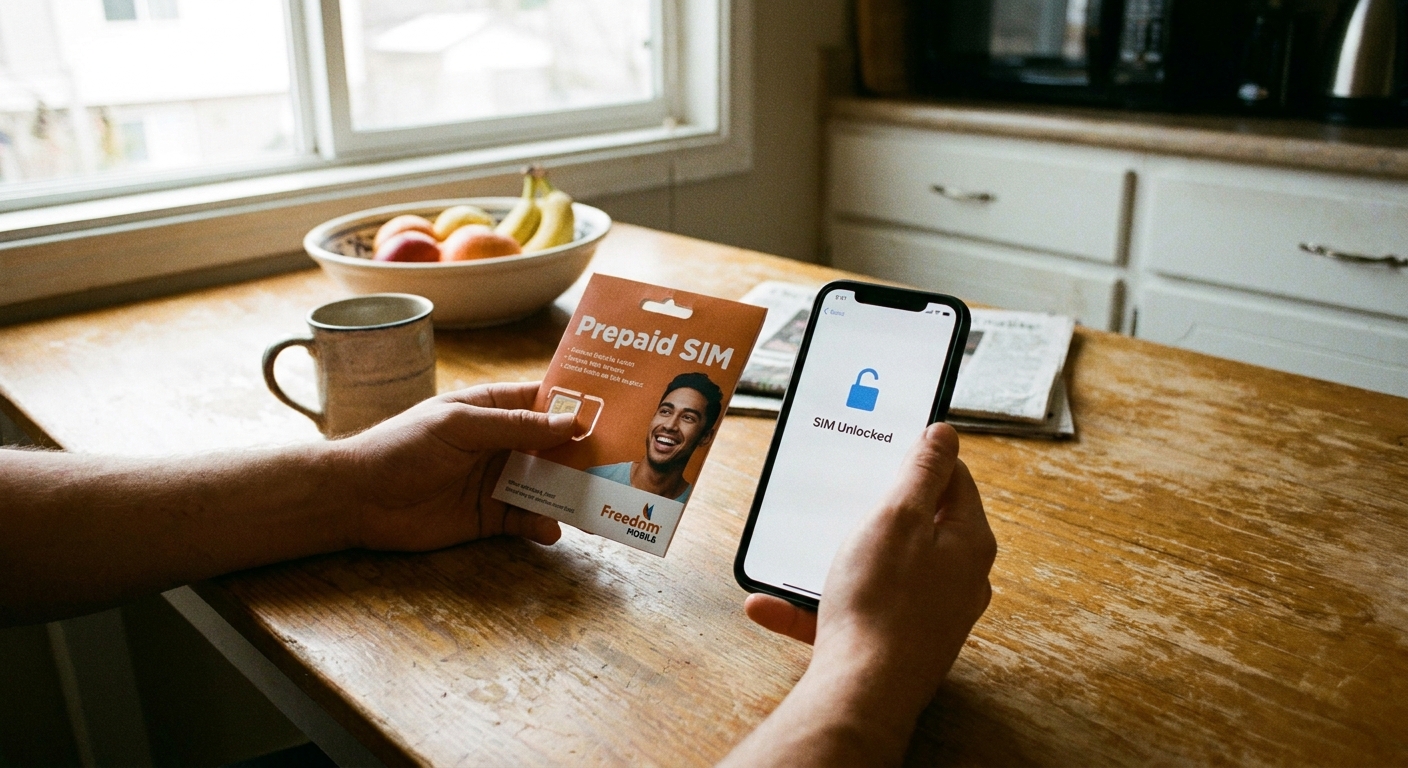
Many prepaid services offer multi-line discounts without credit checks, device financing, or long commitments. The savings can be smaller than the flashiest postpaid deals, but the simplicity is the real win for friend groups.
Option C: Stay separate, cut costs anyway
If your group is not ready to share an account, you can still cut costs with alternatives like Wi-Fi messaging and free texting tools. A lot of people overpay for unlimited everything when most of their communication happens on Wi-Fi anyway. If that is you, start with our Save Money guide and Phone and Bills guide to find easier cuts first.
Pick the account owner
One person should be the primary account holder. Choose them like you would choose the person who keeps the rent envelope safe:
- Financially stable and consistently pays bills on time
- Organized enough to track payments and plan changes
- Not planning a major move or life shake-up in the next few months
- Comfortable saying “no” to upgrades, add-ons, and “can you float me this month?”
If you are the one being asked to own the plan, treat it like co-signing anything: do not do it unless you can cover a missed payment without wrecking your month.
Set rules before anyone transfers
I like to agree on rules in writing in a shared note. Nothing fancy, just clear. Here is what to cover:
1) What exactly is being split
- Plan base cost per month
- Taxes and fees (and how you will divide them)
- Add-ons (hotspot, international, insurance)
- One-time charges (activation, SIM, upgrade fees)
2) Payment timing
- Due date (example: everyone pays the owner by the 20th)
- Payment method (cash apps, bank transfer, whatever you all already use)
- Late rule (example: late after 48 hours triggers removal next cycle)
3) Upgrade and device rules
This is where friend plans explode. Decide now:
- Are device financing payments allowed on the shared account?
- If yes, does each person finance only their own device?
- Who can approve an upgrade?
- What happens if someone leaves with a phone still being paid off?
4) Exit plan
- How much notice someone must give (example: 30 days)
- Who pays any final proration or last month bill
- How you will handle port-out and account access
5) Promos and discounts
This part is not fun, but it is where “we’ll save so much” sometimes quietly evaporates. Multi-line discounts can interact with other deals, like employer or student discounts, device promos, autopay discounts, or home internet bundles. Before switching, list the discounts each person has today and confirm what stays, what changes, and what disappears when lines move.
Privacy and account control
Sharing a plan should not mean sharing your personal business. A few practical protections:
Limit account permissions
- Only the owner should have the full account login.
- If the carrier supports it, add friends as authorized users only if they truly need in-person store access.
- Do not share account PINs widely. Treat the PIN like a debit card PIN.
Turn on strong security
- Use a unique password and app-based 2FA where available.
- Consider a separate email address for the carrier login if that reduces risk.
Know what other people can see
On many accounts, the owner can see high-level usage and billing details. Message content is typically not shown in normal carrier portals, but call logs, numbers, and timestamps often are. Also, not all messaging runs through your carrier. Some app messages will not appear like SMS does. If you want more privacy for messaging, consider using secure messaging apps where appropriate. We cover privacy-focused options in The Most Secure Free Texting Apps for Privacy.
Move everyone over safely
Step 1: Inventory what each person has
- Carrier and plan name
- Is their phone unlocked?
- Do they owe a device balance?
- Any discounts tied to their account (work, student, legacy programs, autopay)
- Any connected devices (watch, tablet, hotspot) on the account
Step 2: Avoid device financing surprises
If someone is still paying off a phone, read the fine print. In many cases, leaving the carrier or canceling a line makes the remaining balance due right away. This is the number one reason I recommend friends consider prepaid multi-line groups if they want the benefits of “together” without the debt entanglement.
Step 3: Port numbers the right way
If people want to keep their numbers, they usually need:
- Account number
- Transfer PIN or port-out PIN (carrier-specific)
- Billing ZIP code and account holder name
Important: do not cancel the old service first. Porting usually closes the old line automatically, but confirm how your current carrier handles it, especially for prepaid accounts or accounts with multiple lines and connected devices.
Step 4: Confirm features after the switch
- Wi-Fi calling enabled
- Voicemail set up
- MMS and group texts working (these can be finicky on some setups)
If your group often sends group messages or photos, it is worth understanding why those sometimes cost extra on certain basic plans. I broke that down here: Why Group Chats and Picture Messages Cost Extra on Basic Plans.
Split the bill without resentment
Pick a fair method
- Flat split: total bill divided by number of lines. Best when everyone has the same plan and no add-ons.
- Line-item split: each line pays their portion plus any add-ons they personally chose (insurance, international, device payment).
- Owner buffer split: everyone pays a little extra (like $2 to $5) to the owner to cover small fluctuations in taxes or proration. This avoids constant micro-adjustments.
My rule: keep add-ons personal
If someone wants device insurance, extra hotspot, international calling, or premium data, that cost should follow that person. Shared costs should be the base plan only.
Also, some carriers offer tools that help with line-level payments or payment requests. If yours does, use it. If not, your shared note plus a consistent due date does most of the job.

Hidden risks and fixes
Risk: someone stops paying
Mitigation: set a clear due date earlier than the carrier draft date. If possible, require the first month upfront when someone joins.
Risk: someone adds charges
Mitigation: lock down who can make changes. Watch for third-party billing and premium SMS traps. If you have never audited your bill for weird add-ons, this is a good time: Hidden Premium SMS Charges: How to Spot and Block Them.
Risk: account security issues
Mitigation: strong password, 2FA, and a PIN that is not shared casually. If someone needs store access, add them as an authorized user rather than giving them the primary login.
Risk: international travel blows up the bill
Mitigation: decide ahead of time how roaming will be handled. My bias is to avoid surprise roaming charges entirely and lean on Wi-Fi messaging when traveling. Start here: Avoid International SMS Roaming Charges Abroad and Send Free International Texts Without Carrier Fees.
A setup that works
If you want a simple model that avoids most fights, here is one I have seen work repeatedly:
- No device financing on the shared account. Everyone buys their phone outright or finances separately.
- Autopay enabled on the owner’s card, but everyone pays the owner before autopay hits.
- Base plan split evenly.
- Add-ons billed only to the person who requests them.
- 30-day exit notice, with a clean port-out process.
This setup is not flashy, but it is stable. Stability is the whole point.
Leave the plan cleanly
People move, relationships change, and roommates graduate. Plan for it so it is not personal when it happens.
Leaving checklist
- Confirm any device balance is paid off (if applicable).
- Check whether you have any connected devices (watch, tablet) that need their own move or cancellation.
- Choose your new plan and make sure it supports number porting.
- Get the account number and port-out PIN from the owner.
- Port the number. Do not cancel first.
- Settle any final prorated charges after the last bill closes.
If the owner is nervous about losing discounts when a line leaves, that is valid. Some plans change pricing by line count. Agree in advance whether the remaining group absorbs the new per-line rate, or whether you will recruit a replacement line.
FAQ
Will my friends be able to read my text messages?
In most cases, no. Carriers do not show message content in normal billing portals. But the account owner can often see metadata like numbers contacted and timestamps, plus the full billing address and payment history. If that bothers you, keep the shared plan strictly for service and use privacy-friendly messaging apps for sensitive conversations. See our privacy-focused texting app rundown.
Can the account owner mess with my line?
Yes. The owner usually can change plans, suspend a line, request a new SIM, or manage porting in some scenarios. That is why trust is not optional here, and why you should keep the account login and PIN tightly controlled.
What if we mostly text on Wi-Fi anyway?
Then you might save even more by downsizing your plan rather than just splitting it. I have had months where my “cell usage” was basically a safety net, and nearly everything happened over Wi-Fi. Start with Guide to Free Texting and how much data texting apps use to see what a cheaper plan would actually support.
Is it better to do this with friends or family?
It is better with whoever is most reliable and least likely to make billing emotional. I have seen friend groups run perfectly for years, and I have seen relatives turn a $30 savings into a feud. Pick the people, not the label.
My bottom line
Splitting a family plan with friends can be one of the biggest “same service, lower price” moves you can make, but only if you treat it like a tiny business agreement: clear rules, limited permissions, and a clean exit plan.
If you want more ways to shrink the bill without sacrificing connection, browse Frugal Living and how to negotiate a lower cell phone bill. The cheapest plan is the one that fits your real life, not the one with the loudest ads.